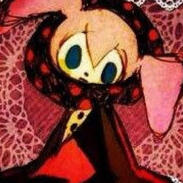
TLDRresearchers are the loners of the 3 roles. spending most of their time in rural areas or other dimensions, only accompanied by a hunter.their wings and tail are smaller and silky. Researchers are also very knowledgeable about magic and have abilities that other Flulearta don't.
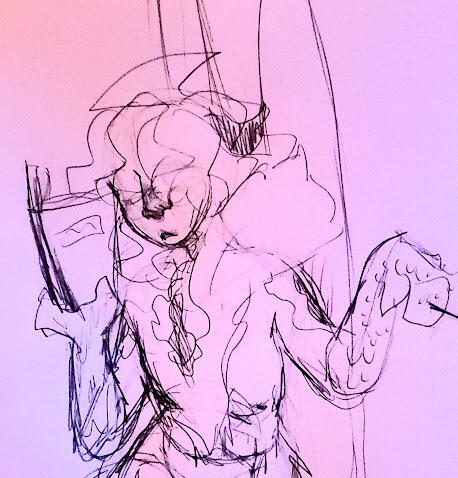
<3Flulearta are very smart creatures, and they starve for knowledge. And so the researchers are considered more important than both hunters and caretakers. Researchers are not seen often, as they are constantly trying to invent new things, find answers, and learn. And there aren't many of them, because successfully becoming a researcher is very difficult. Plus a lot of them live outside of the larger communities, often with a guard accompanying them. They seem to also favor living in other dimensions, and learning about those worlds.Researchers are usually the trusted members of the community that performs the rituals and test the children for their jobs. Alongside caretakers, some researchers take on a teacher or mentor job and teach the children about their knowledge. They are also the role that experiments the most with magic, so they tend to learn new abilities that other Flulearta may never learn in their lifetime. This makes researchers probably the most powerful role, magic-wise, they aren't really physically strong.Talking about physical, let's talk about their characteristics, they often have smaller wings and tails, since they live in very crowded conditions, their wings are a more silk-like texture and they are very furry, this makes it more comfortable for them to sit or stand in one position for a long period of time. Their claws are not super long to make handling things much easier. Researchers have an enhanced ability to remember things they learn and can write/type very quickly. Lastly, they tend to do anything they can to get their information, even if it may be immoral.
TLDRthey dislike the human version of love, and it's despised. they also have no concept of gender.they celebrate many things, the biggest two celebrations, are when children come of age, and when a member of the community dies.
<3Beliefs
A few of the traditions and beliefs are a bit weird. Firstly their disgust of Love and its tie to Humans. Shockingly, just like humans on their planet, the tale of Flower and Thing is also passed down through generations. but they go more in-depth on how Thing/humans are evil and that Love is the reason why. Well, is love is a thing that turns heads and is a touchy subject. It's a curious thing to happen since they are capable of feeling these things. They just hate it, they seem to have their own version of it, which is kind of funny. Some Flulearta can be seen always with another, being very touchy and living together. They call this something along the lines of the human “soulmate” considering the other Flulearta another half of them of sorts. Though not calling it what it is. They also don't have another thing that is normal in human society that they don't even know exists. That is gender, Flulearta has never been exposed to gender roles or even the concept of gender. They clearly identify more with their role in society than with anything else and this is interesting.Also, parties are a big thing, spending time with “family” and friends is a huge value and they celebrate a lot. Parties have lots of nature and games and tend to last for hours. The two biggest parties in a Flulearta’s life are when they become an adult and gain their second set of markings. This is usually a large party celebrating many Flulearta’s at the same time, the children all get to freely fly around and talk to the adults freely in their communities. Really in these large celebrations, the whole community is involved.The second is their death. they celebrate the person’s life, share fond memories, etc. At the end of this party, they chop off the horns of the Flulearta and bury them above the body, and a tree will sprout from the horns. flulearta’s horns have rings like a tree on the inside showing how old they are and this is a staple of the celebration.Royal traditions
Let’s touch on the traditions of the royal family, the only time the position changes is when the last ruler dies (the people will kill their ruler if they are treated poorly) the next in line has to do a series of events to inherit the throne. 1. A series of trials to prove that they will have the people’s happiness and well-being in mind. 2. To kill a really strong behemoth to prove their strength, they will take the skull of the behemoth and use it as a mask. 3 to make a cloak with sentimental value that is very important to the community. 4. To be crowned by the people. Lastly, Fluearta belive it is highly disrespectful to see their ruler’s face, so the one on the throne must wear their mask at all times in front of others.
TLDRthey speak Quilish and rely on their agile voices and body language to convey emotion and words.the written language is below
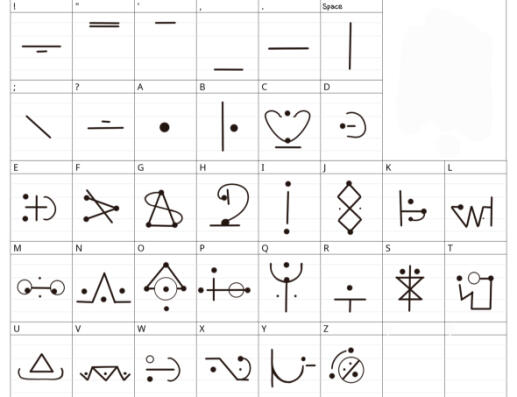
<3Their language is something intresting, it’s various noises and growls, it feels like they don't even speak in words. The noises they make are completely out of human vocal range, and nothing can really be translated from it. They have symbols for many things, this acts as a way for them to write the whole word out. The most common symbols are for the islands, humans, flowers, and Flulearta themselves. Even though a human Can't learn their language, they can certainly learn theirs. It can take them 3 days to learn English fluently. Flulearta communicates via their language which is called “Quilish” and speech isn't the only thing in Quilish that is important. Both tone and body language are heavily relied on. Flulearta’s voices are very agile in tone, and they change their tone/ voice drastically to fit their language. This can very much transfer to English and it makes the Flulearta voice sort of change based on their emotions. It can best be described that they can have a masculine voice one moment and then a feminine voice the next. Body Language-wise they are very expressive. A Lot of the time their tails are ways to signify their emotions and are a direct indicator. They also display emotions with their wings, but not as much. Flulearta has a Few visual and audible warning signs that they display when angry or in distress. Which will be listed here.They admit a deep and low growl, hunching up their nose, and showing their teeth. They also tend to open their wings and puff up their fur to make themselves appear larger. This is practically a sign saying “get the hell away from me”. They are either very irritated/ angry with you or absolutely terrified and are ready to attack if you get closer.Flulearta begins to hide in their wings in a small closed space and wrap their tails around them. Here they are very scared, trying to hide in response, if younger (mainly children) they will do this behind an older FluleartaGrowling and baring teeth at you in general. They are very angry.
When angry they can also act more similar to humans. Younger flulearta are prone to throwing things, whining, stomping around, slamming things, etc. Flulearta raise their voice when irritated, and can yell at others. And lots of other familiar human responsesMultiple voices can be heard when they speak, here they are basically crying.
TLDREzines have lighter fur and lighter horns in color. they have two sets of wings made for gliding.
have an accent where they seem to chirp more.
they live on top of a large mountain range, in harsh cold conditions.
<3Ezines live in much higher and colder climates which causes them to look a bit different. Ezines are a lot fluffier than regular Flulearta and their fur is a lot denser to combat the cold. They have two sets of wings, the top set is the largest set, but they are still quite a bit smaller than normal Flulearta wings. While the bottom set is less than half the top set size. Their wings have more fur around their base to help the wings not freeze. These wings have wide silky feathers that help them glide in the air much easier. They tend to not flap their wings when flying to preserve energy. When flying Ezines has an interesting technique they will use the larger wings to propel themselves in the air, they will use those to get off the ground and will use this type of propelling when trying to fly fast. But for the most part, they use the larger set of wings as a way to glide in the air, using the smaller wings to keep them up. As to the smaller wings do most of the “flapping” while airborne.Ezines’ tail is completely covered in fur and they tend to use their tails as a sort of self-heating mechanism, covering it over their exposed skin when they sleep, or when they are cold. For Ezines, their fur wings and tail all tend to be lighter colors to blend into the snow. With a range of whites, light browns and blacks, and even, more blueish colors. Their horns are also a lighter color, and not pure black, mainly being a brown color, or a dark maroon, they do tend to look black from a distance. Their horns also always point up words, no matter their position or shape, they point up on the head. Ezines’ voices are more soft-toned due to the places they reside being very echoey and they don't need to be very loud, and they only yell when it is a very large emergency. They also communicate in a slightly different language, which is like an accent of Quilish. Via making more chirping, and cat-like noises, adding to normal Quilish.Ezines’s culture is very similar to the rest of Flulearta, they once in a blue moon will take trips down to the ‘main land’ where the queen stays. (and the place mainly described) They also come here to get their third set of markings and roles, as the crystal tree is the only place this can happen. Ezines do seem to care more about keeping their numbers small and staying secluded in their mountains. It's very rare for Ezines to leave their home territory. They are very territorial too, keeping their home and community highly secure from any types of other Flulearta, humans, or anything else that could want in. They will attack anything that gets close to it, but they are friendly when visiting other territories.Ezines’s home is large mountains along a deep trench. They live at the top of these mountains in the various large caves there. Due to one of these mountains being a volcano they do have to be careful just in case of an eruption, they also have to look out for lava fairly often. Though this isn't all bad, in the main and largest cave there is a slight paradise, with natural hot springs. This ‘paradise’ consists of pools of nice warm crystal blue water, surrounded by white sand. Around the water plants grow, trees with glowing berries, bushes, grass, flowers, etc. It flourishes in plant life. There are also rivers that flow all through the caves with plenty of small animals. The hot spring is lit from the cave openings above, shining right down onto the springs. Houses with bridges from all the spaces litter the roof of the cave. Their caves also have lots of crystals and raw ores all over the place, shining all around.
TLDRSixves live in deserts, have two sets of horns and 4 sets of spikes (all with white tips), their talon starts at the base of the leg, are 5'6 on average, have more scales than fur, hooked wings, fangs with poison, and live in small communities
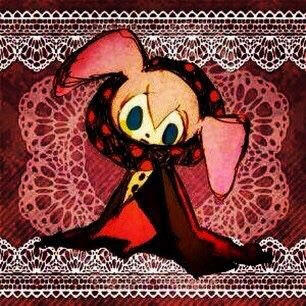
<3Sixves live in hotter climates, mainly in places like deserts. The high heat makes them nocturnal, and live deep underground near underground rivers. Sixvess have less fur, and the fur that they do have is thin and has a rough matted texture, they have more scales on their body mainly on their chest, claws, and on their tail. Their tail mostly consists of scales and is much thinner than normal flulearta’s. Unique to Sixves they have spikes that ride down their back and on their tail. The amount, size, and placement of these spikes depend on genetics, but most commonly there are 8 spikes, 3 on their back, 2 at the base of their tail, and 3 at the end of the tail. The spikes are usually black with white tips and made of the same hard bone-like material that their horns are made of. Speaking about their horns they have 2 sets of horns, their horns look like normal Flulearta Horns except for the small second set of horns that are at most 2 inches tall. They reside often right in front of the larger set of horns. Their horns are black with white tips, these white tips help them be noticed by other Sixvess in their communities.Due to living in complete darkness, they have learned a few ways to combat this, they have wider ears to hear their surroundings and have developed a way to use echolocation. They also can see in the dark somewhat. Much like the animal cats, their eyes can adjust to the darkness very well and can see, this is why they have white tips on their horns and spikes. The white is very noticeable. Though their eyesight can't see everything. So they use echolocation to figure their way around and find prey to kill and eat. This has also become a normal part of their communication. Sixves’s wings are narrow and smaller, they can compact up close to Sixves’ body making it easier to fit in small spaces. Their wings also have slight hooks at the top of them, like bats this helps them climb along the walls of their caves. Sixvess also have an interesting thing about them. Instead of the bird-like legs starting at their knees, Sixves' whole legs are like that. Their legs are also thinner to help them move around. Teeth wise they have sharp fangs that developed a poison to paralyze their prey, this poison can also be used as a neutralizer to other animals poisonous if they were to be bitten. though this does not work with all poisons.Sixves live Far underground in caves, these caves are much less spacious than where other flulearta species live. This makes Sixves 5’6 ish on average. Sixves don't live in large-close communities, but instead in smaller groups spread out along the thousands of miles of caves in the desert that they live in. The largest community lives by a large underground river a few miles under the surface of the earth. This group has about 100 flulearta in it. They live in almost complete darkness, so they have a very precise internal clock. Sixves’s homes are more open than other flulearta's; they like to keep walls open at all times, and the whole community is usually very welcome to enter. Technology-wise, they do have it, but usually, they keep the brightness to a minimum for their eye's sake haha. Sixves seemingly only come up to the surface when hunting for bigger prey. They do this only at night so they could not overheat in the sun. Usually, there are only about 2 entrances to their caves from the surface so they often have to cut the beasts into pieces so they can transport them.
TLDRlive by costs, have hydrophobic feathers and fur, have a longer fin-like tail, are around 6'7 on average, have replaceable teeth, talons and claws are webbed, and lastly, they are very lax and welcoming.
<3
Azirine, as you can guess based on this sort of theme, lives on Coasts. They eat mainly fish and sea creatures and spend a lot of their time in the ocean. Azirine are a bit larger on average than normal flulearta, they are about 6’7. Being taller helps them dive into the water, and swim much easier. They have many features that help them hunt and spend time in the water. Their fur and wings are hydrophobic, which means they don't get wet. They also have webbed claws and talons to aid them in swimming. Due to spending large amounts in the water, Azirine had developed much stronger lungs, allowing them to hold their breath for longer amounts of time. They have a mainly aquatic diet, so Azirine has 2 layers of teeth that curve inwards. Making it easier to catch and hold onto slippery prey. Their teeth tend to fall out after they are worn down, and the set behind it moves forward as the primary set. Azirine’s wings are shorter than the average flulearta, often being around or shorter than a Azirine’s height, making it easier for them to pack their wings in when diving.Azirine’s tails are very unique to their subspecies. Their tails are much longer and have fin-like ends, their tails are also very flexible helping them swim fast underwater. These tails have very little fur on them, other than the short hydrophobic fur on the fin-like areas, and instead have scales covering their tails. Their scales feathers and fur are often shades of red, whites, darker greys, and browns to help them blend in with the water. Their speed is very important when hunting or being in the water in general. Because lagging behind could be life or death. The behemoths under the water experience deep-sea gigantism, so the deeper in the water one goes the larger the monster is. There are also a wide variety of sea behemoths, who could potentially see our Azirine friends as food. So to combat this they use all of their limbs, wings, and tail to help increase their speed within the water. This also helps them be much more efficient at catching prey and being able to conduct their bodies to move in a different direction very quickly.Let's move on to more about Azirine’s diet, they mainly feed on small aquatic vertebrates, and don't go after the much larger behemoths. And the only time they do hunt larger prey they hunt in groups of around 5 or so, and this is usually only done for large events that call for more extravagant foods. Azirine live in coastal caves and caverns that are gutted out by the ocean. The largest is a cavern with a not-so-noticeable opening that slowly gets wider the deeper you go. Then suddenly it drops off, creating a waterfall. Leading into where the Azirine live. Their houses are often carved into the walls of the cave, and much like Ezines they build hanging houses and bridges. Though these do not only apply to the ceiling of the cave, and instead litter its entirety.Azirine are very similar too Flulearta culturally, living in large and close numbers, having close community etc. Though there is more pressure for hunters to step up, since small prey needs to be hunted often to feed everyone. Azirine has the most lax culture, mostly just getting along with the other Flulearta. They do not have any care to fight others and are quite gentle giants. They also are quick to accept others into their communities with open arms.
TLDR
have feathers on their arms, instead of wings. they are very short being 4,9 on average, and have talons that start at the base of their legs. they also have longer tails that are very strong, since they live above ground in a rainforest, living in the trees. they are also the most aggressive and territorial